Blog

  • LIBE 477 Reading Review Part B – Keyword Identification

    As a new teacher-librarian, I would like to strengthen my understanding of information literacy and all is subsequent parts. Below is a list of resources that I have found useful.

    Some of the keywords I used included:

    • Information literacy
    • Media literacy
    • Digital literacy 
    • 21st-century literacy
    • School library

    Before searching for relevant information on the topic, I first need to be able to better define the term information literacy.  The Austrialian School Library Association has a very clear definition of this term, which I found helpful: 

    “The ability to locate, manage and use information to create information products using a variety of inquiry methods is an essential component of any information Literacy program.”   

    Link – https://www.asla.org.au/information-literacy

    After some additional research, I found that the term information literacy is the overarching word used to describe important skills such as media and digital literacy.  MediaSmarts has some useful content that helps to define information literacy and also produces teaching materials for educators seeking to deepen their students’ understanding of media and digital literacy.

    Link – http://mediasmarts.ca/digital-media-literacy/general-information/digital-media-literacy-fundamentals

    A brief YouTube search for ‘information literacy’ returned an extensive playlist from US media awareness organization, Common Sense Media. There are lots of useful short videos that can be used as hooks to lessons on topics such as media and digital literacy.

    Link – https://www.youtube.com/watch?v=mbbuLFUSd0A&list=PL8TjVyuBdsCm06G_g1wA1oCsZaPgYMz2U

    The Virtual Learning Commons offers a broader definition of information literacy by breaking the term up into categories such as visual literacy, library instruction, cultural literacy, and computer literacy.  It acts as a repository for all things information literacy related. 

    Link – https://vlc.ucdsb.ca/c.php?g=101195&p=656334

    Lastly, a UBC library search covering the last 5 years returned two interesting hits.  The first was an article written about how different schools around the world utilize their libraries to improve literacy, and the second was a book written by Denise E. Agosto titled, Information Literacy and Libraries in the Age of Fake News.  In Agosto’s book, she covers topics ranging from fake news and information literacy in society to combating cultural misinformation on the internet.

    Links: 
    1. http://web.a.ebscohost.com.ezproxy.library.ubc.ca/ehost/pdfviewer/pdfviewer?vid=1&sid=f5176dce-0c1f-48ee-b483-f30a80306ece%40sdc-v-sessmgr02
    2. https://ebookcentral.proquest.com/lib/ubc/detail.action?docID=5518324
  • LIBE 477 Reading Review Part A – Topic Identification

    During the next several weeks, I will be posting about my learning from my LIBE 477 course as part of my teacher-librarianship diploma.

    In this particular post, I’d like to share some of the areas of education and learning I’m most passionate about. When I think about professional development concerning my new position as a teacher-librarian in a k-5 school I get excited about the endless possibilities. There are so many exciting and interesting areas of education that fit well within the parameters of a library learning commons.

    I am interested in deepening my understanding of information literacy and all its intricate components. We are surrounded, often bombard, with a constant flow of information in our digital lives. Being able to make sense of that information, evaluate it, and extract meaning is an important skill and one we should be sharing with students in schools from an early age. We have to acquire the skills to question the mass of information we are exposed to more than ever to ensure we don’t contribute to the spread of misinformation.

    In addition to information literacy, I am fascinated by the idea of connections-based learning. I would like to continue to explore the power of the latest digital technologies to reach outside of the walls of our schools and make meaningful connections with our local and global communities. Projects such as Exploring By The Seat Of Your Pants and Microsoft’s virtual field trips can help students experience events that would otherwise not be feasible.

    Student-led learning is also important to me. I’ve witnessed the incredible achievements of students who have been allowed to direct their learning. I am always looking for better ways to scaffold this process for students by helping them narrow down a topic of interest, collect appropriate resources, and capture their learning more efficiently and effectively. Over the years, I have developed my own framework for this that I call C.H.O.I.C.E – Children Have Ownership In Choice Education. It’s a work in progress that needs developing and refining.

    Lastly, as a new teacher-librarian, I have a desire to transform my school library into a library learning commons that represents a place of inclusion, innovation, compassion, and creativity. A library learning commons has no specific standard that defines it but I would like to take the time to see what others are doing in their libraries. Ideas that are at the back of mind including moving away from Dewey into the bookstore model, researching the necessary hardware and software to enable quality virtual field trip experiences, creating a makerspace, and finding creative ways to engage our most at-risk readers in the joy of reading.

  • Morning Classroom Routines

    Morning Classroom Routines

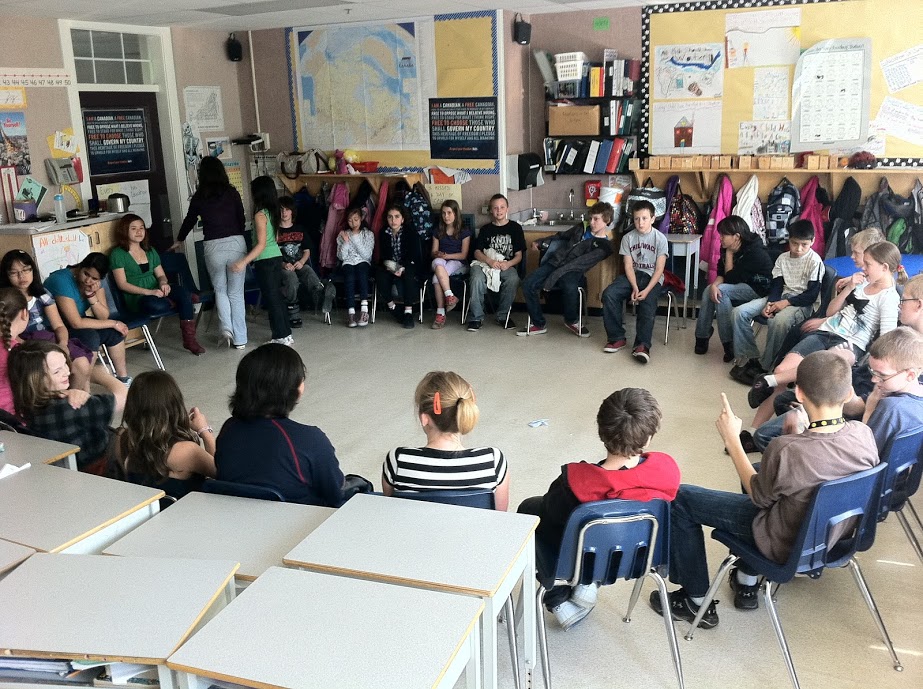
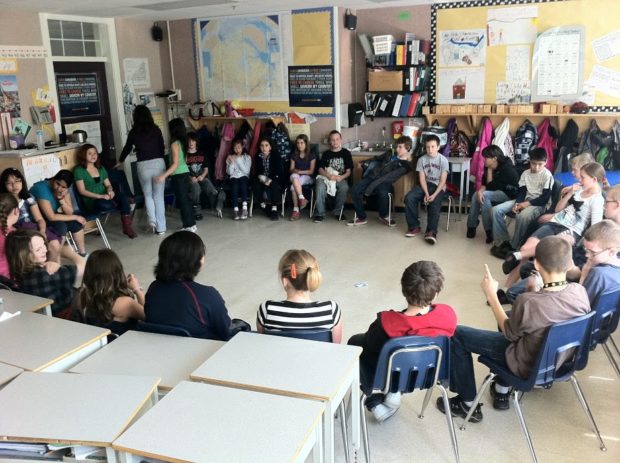
    My students and I start our day by sitting in a circle with the specific purpose designed to connect, learn from other, and develop a sense of community.  Sometimes, we meet in ‘circle’ for close to an hour and I think it’s where the most powerful learning happens.  The inspiration for my morning routines is firmly fixed in the mindset of restorative practices. For many years now I have been an admirer of restorative practices in schools. In fact, I’ve tried to implement restorative practices in every school and classroom I have worked in because I believe they honour the building, maintaining, and rebuilding of relationships, and in schools relationships are the currency in which we all prosper.  Each morning, I try to include a different activity.  This year I’ve been working on refining the activities detailed below, and I wanted to share them with you.  Please feel free to let me know what you think, or if you’d like more information on a particular activity.    


    Day 1

    Daily Wonder

    Image courtesy of Apple iTunes Store 

    Developing strong oral language skills is an important part of improving students’ social-emotional skills.  The Daily Wonder app, is an affirmation app that provides a precept (quote) for each day of the year celebrating goodness and strength.  It’s based on the book 365 Days of Wonder by R. J. Palacio.  I have a split class so one week I ask my grade 5’s to tell me what the quote means to them.  By using the language ‘means to them’ it takes away any pressure that there is one correct answer.  The next time we display a quote in the circle the grade 6 students have an opportunity to share. At the end of each sharing session, I open it up to anyone that is keen to share.  Some of the thinking and connections students have made to the quote has been deep-thinking indeed.


    Day 2

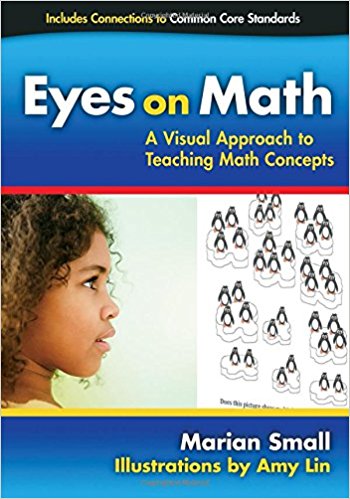
    Eyes On Math

    Image courtesy of Amazon Canada 

    We often get caught in the cycle of computation in math, but there should be so much more to our math curriculum; math is visual, math is about noticing and identifying patterns, and finding reasons and rules to patterns.  One way I have tried to open up my math curriculum is to start the day looking at @marian_small’s book, Eyes on Math. This is a great way to stimulate mathematical teaching conversations around key K–8 concepts. Each picture comes with recommended guided questions.  This activity is also graet for building mathematical thinking and vocabulary.


    Day 3

    Daily Picture

    Image courtesy of The Learning Network by The New York Times

    We use the New York Times’ What’s Going On resources, which involves a series of intriguing weekly Times images stripped of their captions.  We invite students to look at the picture for one minute without discussing with a partner, then give them another minute to discuss the following questions with an elbow partner.  What’s going on in this picture? What do you see that makes you think this way? What more can you find? The last step involves sharing with the rest of the group. This resource fosters an environment for critical and creative thinking, and provides an opportunity to develop students’ curiosity about news, current events, and cultures around the world.  Each Monday, a new image is released without the explanation and every Thursday the details of what actually happening in the picture are shared.


    Day 4

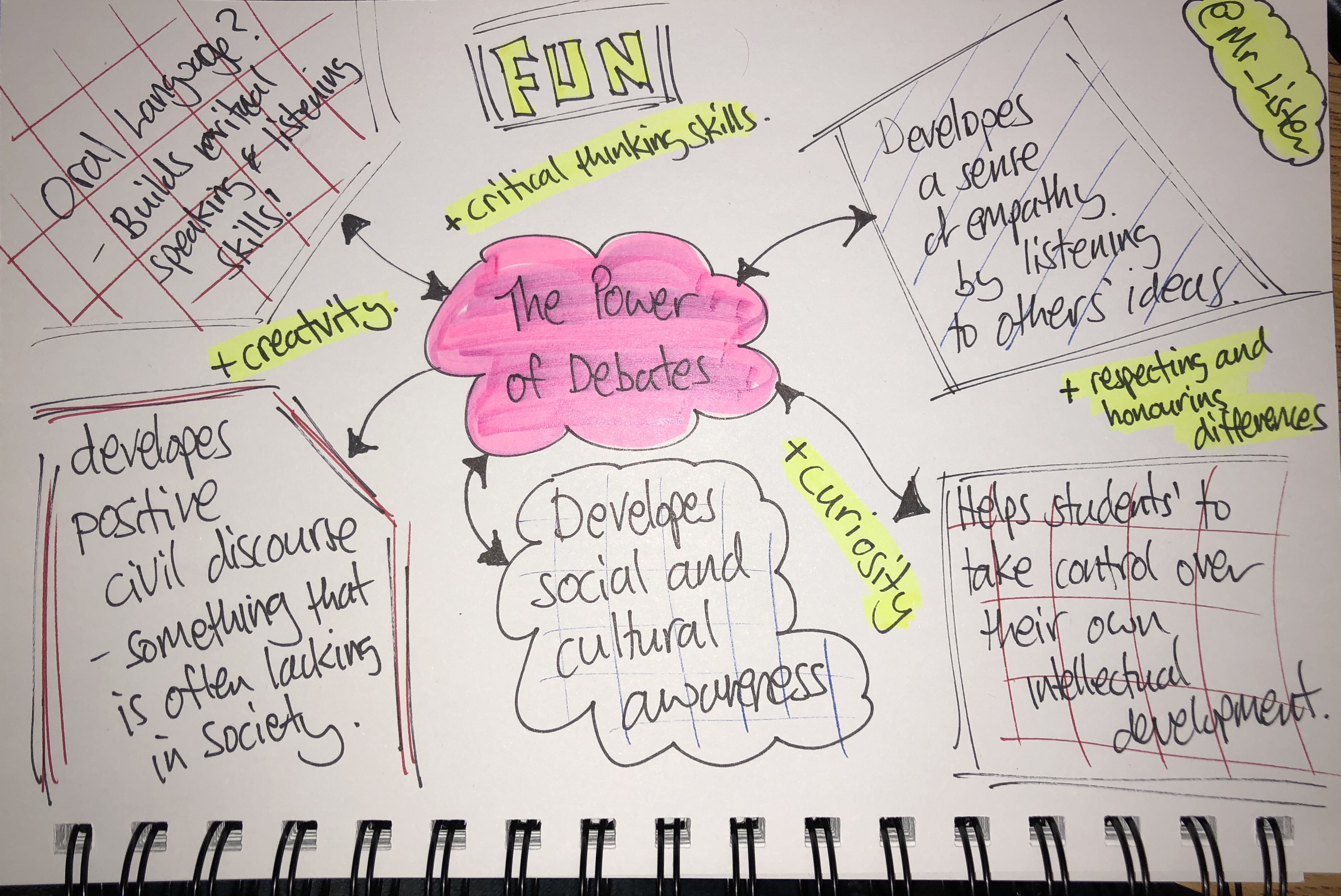
    Classroom Debates

    “The Power of Debates” by Christopher Lister is licensed under CC BY-NC-ND 4.0

    Holding small casual debates in class helps to develop powerful listening and speaking skills.  They also develop empathy, understanding, and introduce students to a variety of worldviews. Perhaps the most powerful part of class debates has been the way in which students have developed the ability to maintain different ideas/opinions without feeling judged or personally attacked.  


    Day 5

    Fun!

    “Students in Circle” by Christopher Lister is licensed under CC BY-NC-ND 4.0

    Circle time, especially at the beginning of the school year, needs to be fun and lighthearted.  Students who don’t feel safe taking risks or being vulnerable with their learning tend to go through the motions in the circle.  It’s like they are viewing the events of the circle through a window but don’t have the social-emotional skills to step through and activity participate.  One way to combat this is to make students feel safe. I do this in a variety of ways including dance, sharing of jokes, practicing rhythms, stimulating students’ imaginations, and playing games.  


    These links may be useful:

    Circle games we play – http://bit.ly/circle-games   

    Dance playlist – http://bit.ly/dance-videos

    Circle questions – http://bit.ly/circle-questions

    Rhythm games – https://www.youtube.com/watch?v=sibO2k0JVxI


  • EDCI 569 Learning Project Summary: Inquiry Learning

    “Inquiry Learning Word Cloud” by Christopher Lister is licensed under CC BY-NC-SA 4.0

    This blog posting reflects a summary of my learning on the topic of inquiry learning for the EDCI 569 #learningproject assignment.


    Starting point:

    I attempted to introduce an inquiry learning block into my weekly schedule last year and it did go well.  I did not scaffold the process nearly enough to ensure all my learners experienced success.  http://christopher-lister.ca/choice/reintroducing-inquiry-learning-into-the-elementary-classroom/


    Making connections:

    I needed to understand how other k-12 educators were incorporating inquiry learning:

    http://christopher-lister.ca/tiegrad-2/learning-project-reflection-inquirychat/


    Theoretical frameworks:

    All classroom decision should be made based on evidence-based research.  Inquiry learning falls under the overarching learning theory of constructivism.

    http://christopher-lister.ca/tiegrad-2/constructivism-the-foundation-of-inquiry-learning/


    Understanding the cycle of inquiry:

    Before blindly jumping into an inquiry project it is important to know where you plan to take your students learning.

    http://christopher-lister.ca/tiegrad-2/inquiry-learningproject-reflection/


    Important questions around inquiry learning:

    When introducing inquiry learning into the classroom there will inevitably be stumbling blocks along the way.  It is nice to get ahead of the curve and learn from others.

    http://christopher-lister.ca/tiegrad-2/3-important-questions-on-classroom-inquiry/


    Models of inquiry:

    Exploring Spirals of Inquiry by Halbert and Kaser helped me understand the need for this type of student-centred learning.

    http://christopher-lister.ca/tiegrad-2/inquiry-lit-review-reflection/


    Scaffolding the inquiry process:

    Helping student understand and define inquiry learning is important.

    http://christopher-lister.ca/tiegrad-2/scaffolding-an-inquiry-question-with-kids/


    The importance of self-regulated learning skills:

    Time is needed to make sure students, embarking on a journey of inquiry learning, have the necessary learning skills to be successful.

    http://christopher-lister.ca/tiegrad-2/self-regulated-learning-skills-a-prerequisite-for-inquiry-learning/


    Variations of inquiry learning:

    Game-based and simulation-based learning lend themselves well to the pursuit of inquiry learning.

    http://christopher-lister.ca/tiegrad-2/game-based-learning-in-an-inquiry-framework/


    Resources:

    My Diigo bookmarks on the topic of inquiry learning:

    https://www.diigo.com/outliner/2o04r1/Genius-Hour-CHOICE-Inquiry-Personalized-Lerning?key=j3rb5xgstu


    Twitter Chats associated with inquiry:

    #InquiryChat – Biweekly on Thursdays at 6pm PST

    #GeniusHour – First Thursday of every month at 6pm PST


    Key BC educators involved with inquiry learning:

    Hugh McDonald @hughtheteacher

    Neil Stephenson @neilstepenson

    Gallit Zvi @gallit_z

    Linda Kaser @lkaser

    Judy Halbert @JLHALBERT


    Future:

    I have just started to collect and curate my own content on the topic inquiry learning and look forward to continuing to explore this in the future.


  • Self-Regulated Learning Skills: A Prerequisite for Inquiry Learning

    “Faces of UVic Research: Allyson Hadwin” by FacesOfUVicResearch, University of Victoria is in the Public Domain

    Lately, I have been reflecting on my practice, and on the development of inquiry-based learning (IBL) in my elementary classroom.  This post is a continuation of this theme and asks the question of whether, true, inquiry-based learning can occur in classrooms where too many students lack the necessary self-regulated learning skills to be independent learners.


    When I talk about self-regulation skills (SRL), I refer to the Canadian Consortium for Self-Regulated Learning research-based perspectives on learning:

    • Learning is a reflective and social process that covers flexible thinking, motivation, and emotion, not just behaviour.
    • Learners are active and present in their learning, and can work towards self-determined goals.
    • Learning is a complex procedure and needs to be supported by all stakeholders including, students, peers, parents, community, and school.
    • Self-regulated learning skills are a set of procedures that are essential to developing lifelong learning in and out of school.


    Inquiry-based learning has many definitions, and its core components exist in similar student-centred pedagogies such as discovery learning, constructivist learning, and problem-based learning.  I like Maaß & Artigue’s, (2013) definition of IBL, which refers to a student-centred way of teaching where students create questions, explore problems, and develop solutions:


    “Inquiry is a multifaceted activity that involves making observations; posing questions; examining books and other sources of information to see what is already known; planning investigations; reviewing what is already known in light of experimental evidence; using tools to gather, analyze, and interpret data; proposing answers, explanations and predictions; and communicating the results.”


    There have been several classroom occurrences that have led me to question whether, true, inquiry learning is suitable for all learners.

    Students who say, “I don’t know what to do!” after spending weeks discussing what inquiry is and is not, developing plans, and deepening their understanding of questioning, lack the necessary skills to be successful in this environment.

    Students who cannot find suitable resources on a chosen topic, document their learning, work towards an end goal that may be several weeks away, or synthesize learning in the form of a presentation, are at a distinct disadvantage when it comes to inquiry learning.

    Within any given class, there must exist a ratio, a magic number, which indicates whether or not true inquiry learning can take place in a classroom.  If the number of students who lack the self-regulated learning skills of organization, motivation, questioning, recording, and observing are too great, then learning shifts from student-centred to teacher-centred.

    My goal next school year is to target the development of student’s self-regulated learning skills before engaging in inquiry-based learning.  This will ensure an increased number of students will have the necessary skills to be successful in this area.


    References:

    Canadian Consortium for Self-Regulated Learning.  What is SRL?  Retrieved March 14th, 2015 from  http://srlcanada.ca/what-is-srl/


    Maaß, K., & Artigue, M. (2013). Implementation of inquiry-based learning in day-to-day teaching: A synthesis. ZDM – International Jo

  • Game-Based Learning In An Inquiry Framework

    gbl im kindergarten

    “gbl im kindergarten” by elisabeth, 24.04.2009 – Projekt “Digital Game Based Learning” is licensed under CC BY-NC-ND 2.0

    For my literature review, I have been struggling to find a focus within the overarching topic of inquiry learning.  One area of inquiry learning I keep coming back to is game-based learning (GBL) or simulation-based learning (SBL).  These two areas of inquiry learning form the basis of my reflection this week.
    If the goal of inquiry learning is to foster student discovery, then gaming provides unlimited opportunities for learners to make discoveries and experiment.  Mark Hawkes, BC Ministry of Education, has been super helpful with providing contacts and information supporting the use of GBL and SBL in classrooms.  According to the 2011 Horizon Report:

    Game-based learning has grown in recent years as research continues to demonstrate its effectiveness for learning. Games for education span the range from single-player or small-group card and board games all the way to massively multiplayer online games and alternate reality games. Those at the first end of the spectrum are easy to integrate into the curriculum, and have long been an option in many schools; but the greatest potential of games for learning lies in their ability to foster collaboration and engage students deeply in the process of learning. Once educational gaming providers can match the volume and quality of their consumer-driven counterparts, games will garner more attention.

    –NMC Horizon Report: 2011 K-12 Edition

    Video’s supporting the use of GBL/SBL in schools:


    Katie Salen on Learning with Games by Edutopia


    Jane McGonigal Speaks On The Skills Students Are Learning From Games by Knowledge Works

    A Case for GBL and SBL Use In Classrooms:

    1. Whenever I get together with other educators at workshops and professional development opportunities, I constantly hear the rhetoric that students don’t take risks and are afraid to fail.  I think games and simulations create safe environments for students to take risks, fail, and learn from their experiences in ways that do not exist in many classrooms.
    2. GBL and SBL allow users to experience essential 21st century skills and social practices such as collaboration, problem-solving, team-building, and different ways of being and doing.
    3. Good game designers scaffold and differentiate their tasks and objectives well, and this mirrors the techniques many educators are trying to replicate in the classroom.


    As I continue to develop my understanding of GBL/SBL please feel free to share your experiences on the topic.

    References:

    Johnson, L., Smith, R., Willis, H., Levine, A., & Haywood, K. (2011). The 2011 Horizon Report. Media (Vol. 2010, p. 36). doi:10.1002/chem.201001078


  • Scaffolding An Inquiry Question With Kids

    Informing a bunch of rowdy 10 and 11-year-olds that you are going to create space in their weekly schedule, and allow them to follow their passions, is easy.  Nurturing a sense of wonder and helping students generate deep-thinking questions to guide their inquiry journey is entirely more challenging!


    I had the pleasure of attending an inquiry session on the topic of #geniushour with Hugh McDonald in Chilliwack on Friday.  Through this session,  I learned the importance of scaffolding inquiry questions with my learners.  I’ve tried to engage in inquiry learning without guiding questions, but I found that my learners lacked focus.  This week, my learning centers on scaffolding the process of generating questions to guide inquiry.


    Generating Context:

    Videos and books are two great ways to generate context around inquiry thinking.


    Sharing videos that depict people engaging in their passion are always very helpful.  I like Caine’s Arcade by Nirvan Mullick because it clearly demonstrates the creativity, grit, determination, and passion on a regular nine-year-old kids – something that I hope my learners can connect with.

    ‘Caine’s Arcade’ by Nirvan Mullick


    I also like Moonshot Thinking because it emphasizes that ordinary people have and will continue to advance social change in positives way.

    ‘Moonshot Thinking’ by Google


    The last video I’ll use to provide context to inquiry learning is Audri’s Rube Goldberg Monster Trap because I love his enthusiasm and the scientific lens through which he approaches his inquiry.


    ‘Audri’s Rube Goldberg Monster Trap’ by littlepythagoras


    Picture books, which highlight creative forces at work can also be helping in providing context for inquiry learning.  Some of the books I’ve found include:


    Helping Learners Find Their Passion:

    I found last year that students whose parents were actively engaged in their child’s school experience were able to find their passions much sooner than those who did not.  There are those students I encounter every year who are internally ‘driven’ and have no problem identifying and describing their passions, but the majority of my learners need time and a little help discovering their talents.


    Below are ways to help the majority of your learners find their passion.  Ask students to make a list of:

    • Five things you love to do
    • Five things they are good at
    • Five things they like to do outside of school
    • Things you do when nobody is telling you what to do


    Thinking is Driven By Questions:

    I value the literacy work of Vancouver educator, Adrienne Gear and her series of Reading Power Books.  In particular, I have found her nonfiction work on questioning to be extremely useful.  I used to think that my learners should be able to generate thoughtful questions surrounding the work we do, but I’ve learned that to ask deep-thinking questions is a skill that requires development.


    My students ask a variety of different types of questions.  Many are examples of simple questioning; questions that identify information they already know about the topic – redundant questions, and questions that do not move the inquisitor to a deeper understanding the topic – distracting questions.

    According to Gear (2008), deep-thinking questions:

    1. Take time to answer
    2. Help to deepen understanding of the topic
    3. Usually have more than one answer
    4. Lead to more questions

    When embarking on classroom inquiry projects, it is important to spend the time helping all learners find their passion.  This process can begin by asking simple questions about what learners do when they are not in school.


    References:

    Gear, A. (2008). Nonfiction Reading Power. (K. Mototsune, Ed.) (p. 160). Markham: Pembroke/Stenhouse.


  • Constructivism: The Foundation of Inquiry Learning

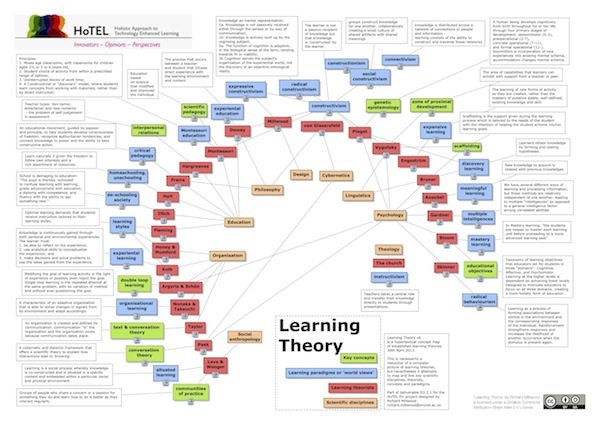
    LearningTheoryCMap

    Attribution: ‘Learning Theory’ by Richard Millwood – http://blog.richardmillwood.net/2013/05/10/learning-theory/ Licensed under a Creative Commons attribution – Share Alike 2.0  

    There is also a live CmapTools version of the above image with clickable links to Wikipedia and InfEd.


    Learning theories are frameworks used to explain how people learn and acquire knowledge.  They form the basis of all pedagogical instruction.  Learning theories in education are varied and numerous.  Some focus on the cognitive and emotional influences while others focus on environmental factors and prior experiences of learners.  Not only do they represent the lens through which all learning experiences are designed, they also represent an anchor to which educators can return when their practice needs refocusing.


    As I document and embark on the journey of reintroducing inquiry learning into my elementary classroom, I felt the need to explore the theoretical frameworks that support inquiry learning.  Richard Millwoood’s blog posting titled, Learning Theory and, in particular, his visual representation of the main learning theories, helped me link inquiry learning to the paradigm of constructivism.


    Constructivism is a theory of knowledge.  It states that humans ‘construct’ knowledge, information, and ability to learn by interacting with and reflecting on their experiences with the world around them.  It has its roots in three core scientific disciplines; Education, psychology, and philosophy.  Constructivism is also connected to the principles of design and cybernetics.  Jean Piaget is said to be the father of the constructivist learning theory, but Jerome Bruner has continued to develop the work started by Piaget.

    Constructivism as a Learning Theory

    • Knowledge is constructed and shaped by one’s experiences
    • Learning is a personal interpretation of the world
    • Emphasises problem-solving and understanding
    • Uses authentic tasks, experiences, settings, assessments

    Inquiry

    Inquiry-based learning is an approach to teaching and learning that places students’ questions, ideas and observations at the centre of the learning experience.  The underlying approach is the idea that both educators and students share responsibility for learning. I like Neil Stephenson’s Introduction to Inquiry-Based Learning and his view that inquiry involves:

    1. Learners tackling real-world questions, issues and controversies
    2. Developing questioning, research and communication skills
    3. Solving problems or creating solutions
    4. Collaborating within and beyond the classroom
    5. Developing deep understanding of content knowledge
    6. Participating in the public creation and improvement of ideas and knowledge

    Constructivists Classrooms

    An educator’s role in a constructivist classroom is to prompt and facilitate discussion, and to guide students by asking questions that will lead them to develop their own conclusions on a subject.  If inquiry is based on the belief that knowledge is generated through the process of people working and conversing together to tackle real-life problems, and make discoveries, then constructivism and inquiry are a perfect match!

    References:

    Constructivism (philosophy of education). (2015, February 9). In Wikipedia, The Free Encyclopedia. Retrieved 17:11, February 15, 2015, from http://en.wikipedia.org/w/index.php?title=Constructivism_(philosophy_of_education)&oldid=646400623

    Learning-Theories.com. (n.d.).  Summaries of learning theories and models.  Retrieved, 10:11, February 15, 2015, from http://www.learning-theories.com/

    Learning theory (education). (2015, February 12). In Wikipedia, The Free Encyclopedia. Retrieved 16:35, February 15, 2015, from http://en.wikipedia.org/w/index.php?title=Learning_theory_(education)&oldid=646769180

    Millwood, R. (2013, May 10). Learning theory [Blog Post]. Retrieved 9:02, February 15, 2015, from http://blog.richardmillwood.net/2013/05/10/learning-theory/

    Stephenson, N. (n.d.). Introduction to inquiry-based learning [Blog Post]. Retrieved 10:23, February 15, 2015, from http://www.teachinquiry.com/index/Introduction.html


  • Inquiry lit Review Reflection

    My literature review on the theme of inquiry learning is developing slowly at best!  Inquiry learning is such a wide topic that I feel an impending need to narrow the focus.  I have considered looking at inquiry learning through the lens of game-based and simulation-based learning, but my experience is this area is limited.  I could narrow the focus of inquiry learning to the area of elementary school education, but that feels a little bit like a ‘cop out’.


    In spite of the general frustration surround my literature review, I have made some progress with respect to content of my research.  Through the research I’ve read so far I feel it necessary to include information on the following:


    • Define inquiry learning and include a quick review of the different types
    • Include a section in my literature review on why inquiry learning is sound pedagogy practice for elementary school educators, and discuss the reasons for change
    • The link between inquiry learning and self-regulation skills


    Spirals of Inquiry by Judy Halbert and Linda Kaser it has helped me frame some of my thinking about inquiry learning lately.  Halbert and Kaser are co-leaders of Networks of Inquiry and Innovation and the Aboriginal Enhancement Schools Network.  They are also co-directors of the Centre for Innovative Educational Leadership at Vancouver Island University where they teach graduate programs in educational leadership.


    According to Halbert and Kaser, the need for inquiry-learning in school is born from a disturbing trend of student disengagement from the current education system in British Columbia.  They claim that the current model of education is viewed in one of three ways:

    1. Educators and government need to focus on the quality of teaching and learning by narrowing down specific learning targets, making sure everyone understands the goal and is prepared to be in it for the long haul.
    2. Today’s digital learners need to be educated in a system that is radically different from the current model, and a major overhaul is required.
    3. The system is fine the way it is but is severely underfunded – money will fix the problem.


    Spirals of Inquiry attempts to honour all three views in an appeasing manner.


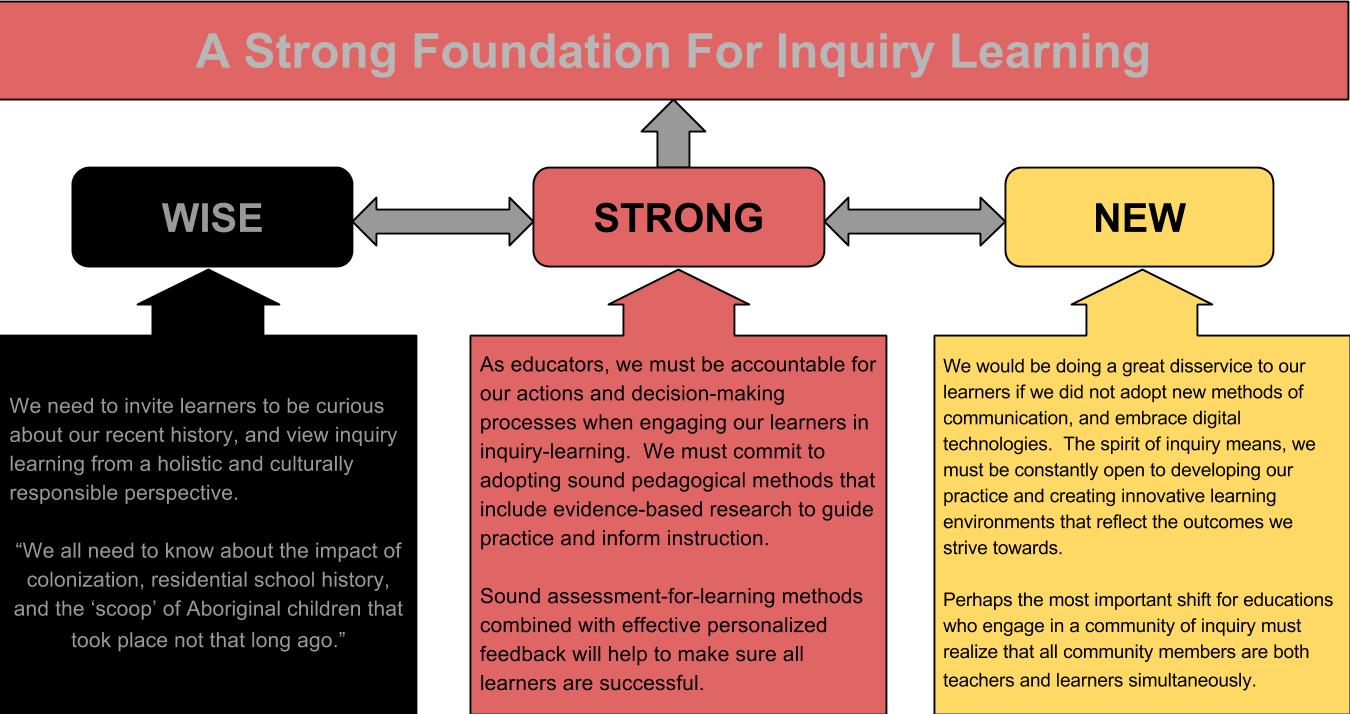
    Although I am only halfway through the book, I have appreciated their connection between indigenous culture and inquiry learning – something I would not have considered an obvious link before reading their work.  I have attempted to visualize the lens through which Halbert and Kaser view inquiry learning in the diagram below:


    Spirals Of Inquiry (1)

    Adapted from the book, Spirals of Inquiry by Halbert and Kaser in association with BCPVPA


  • 3 Important Questions On Classroom Inquiry

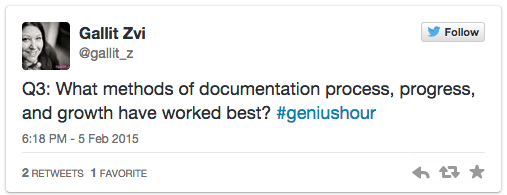
    During last Thursday’s #GeniusHour Twitter chat, I learned how to handle three considerations on my journey to reintroduce inquiry learning into my elementary classroom.

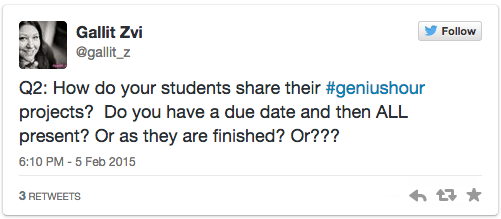
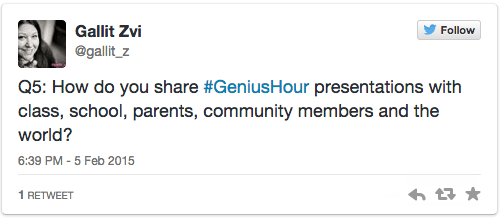
    GeniusHourChat_Pic1GeniusHourChat_Pic5

    After a round of brief introductions, chat moderator for the night, @Gallit_z, offered the above questions for the group to discuss. During my initial attempt at introducing inquiry learning with my students last year, I was extremely vague on deadlines and due dates, and I believe this contributed to organizational challenges I experienced.  I was particularly interested in this question because my students didn’t get to present last year, and I wanted to get a sense of how this important part of the inquiry cycle would work in my setting.  Most of the educators who attended Thursday’s chat used some form of social media to allow their students to share their learning outside of the four walls of the classroom.  Social media networks allow students to engage in ‘visible thinking’ throughout their inquiry as oppose to just at the end of it.


    There was a variety of different ways that educators used to share their student’s final work.  Two outstanding ideas both involved engaging with the community outside of school.  @pstolt1 hosts a BYOD (Bring Your Own Dinner Night) for parents and family members while @jcd118 presented student inquiry projects to the school board.  Inquiry learning should involve the active participation of the community, and I am excited to try and host a bring your dinner (BYOD) night to celebrate student achievement.


    GeniusHourChat_Pic6


    Asking students to document their learning is an important part of the inquiry process.  It encourages accountability and is a valuable self-regulation skill.  Last year, I thought I had prepared my students well in this area, but they seemed to find it challenging when asked to explain what they had discovered during that week’s learning block.  I asked my learners to fill out this Google Doc at the end of each inquiry block.  Many of the educators in Thursday’s chat also used something similar to track their students’ learning.  The difference between those who were successful in student’s documenting their work, and those that were not, were educators who conferenced with their students on a regular basis.  Most of the educators in this chat housed their student tracking in one spot to make it easy to view and offer guidance.  I didn’t do this last time but will certainly incorporate it this time.  Trello, Padlet, and a range of Google tools are excellent resources to track whole-class learning.


    GeniusHourChat_Pic2

    When I first introduced inquiry learning to my students, there was a rush of excitement from the class.  I heard expressions like, “Finally, I get to learn about something I like!” or “Cool, I’ve always wanted to learn about…!”  Naturally, when students were asked to narrow down their focus and document their learning some of their initial passion dissipated.  Knowing what to do if my students get into a rut with inquiry learning is of high value to the facilitator.  Once again, there was a variety of tips for maintaining learning momentum.  I appreciated @PlainfieldGH advice – “Modify your project to overcome.”  I think there is great value in teaching young children that their initial ideas may not come to fruition and that a redesign is a natural and important step in the process.  @HughTheTeacher shared a link to several motivational videos that I will no doubt need to explore at some point, while others participate in Motivational Mondays.  If the inquiry is to be successful for all students I’ve learned that it is important to accept that at the initial excitement about learning will fade, and it would be beneficial to be prepared for it.