LIBE 467 – Managing and Evaluating Reference Service

This latest blog post encompasses a personal reflection on managing and evaluating reference services in a school library – the second theme in my latest teacher-librarianship course, LIBE 467 Information Services.

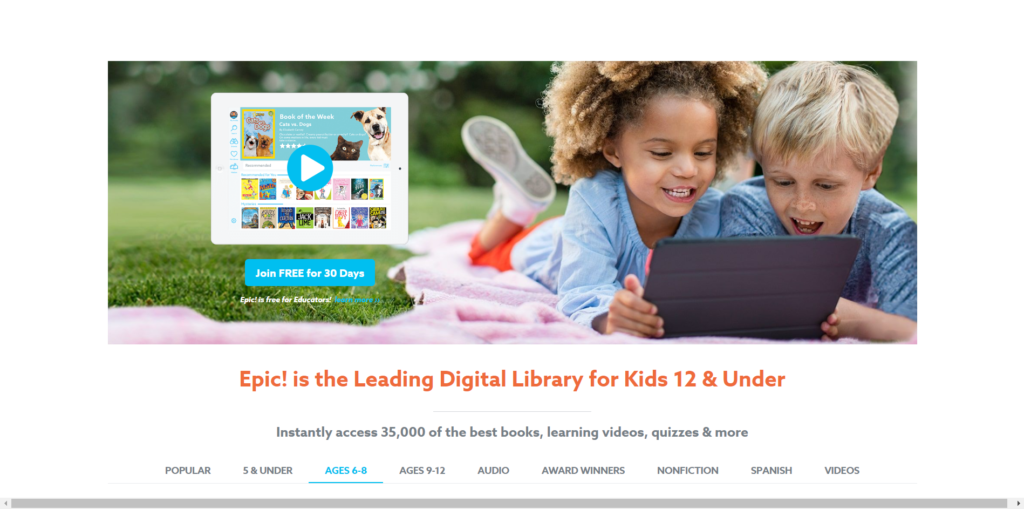
Managing and evaluating a school library’s reference collection is both challenging and rewarding.  In regards to the reference interview, the act of clarifying and assisting with students’ reference needs has been extremely satisfying.  I have enjoyed developing new questioning techniques in order to narrow down students’ areas of interest, as suggested in Riedling’s Reference skills for the school librarian: tools and tips.  I also found that through these experiences I have become more familiar with the reference section of my library by knowing its strengths and weaknesses. I know what I physically have and have not in my collection, and when I don’t have a particular resource, like information on the pangolin, I have learned to curate some digital resources for students.  I have also started to explore the online databases available through my school district as well as applications like Epic.
In contrast to the joys of discovering students’ interests through the interview process lies the challenge of assisting and facilitating research and resource-based projects.  Even though this is a passion of mine and in spite of spending countless hours reviewing and refining the way I facilitate this kind of learning, I am not completely happy with the process.  The biggest challenge with this kind of learning is helping students generate ideas for research. I am passionate about giving students choice over their research/learning, and for the most part, students respond well to the choice but there is always a handful that doesn’t seem to be able to generate their own ideas.  Luckily, I have the opportunity to spend time with Trevor Mackenzie, author of Dive into Inquiry, this week and dig deeper into learning how a teacher-librarian can best support students engaging in resource-based learning activities.

Over the last month or so, I’ve also enjoyed evaluating and organizing my reference collection.  With the help of the Canadian Association of School Libraries’ Achieving Information Literacy: Standards for School Library Programs in Canada, I have been able to critically evaluate the reference section of my library for currency, quantity, and curricula connections.  From a print-based perspective my library’s reference section needs maintenance. From a digital resource perspective, my school district provides a number of excellent resources from which students can develop their inquiry skills.      

Before taking this course the question of print vs digital reference material was an easy choice.  There was only one right answer, but as many of the teachers in my school and school district move away from screen-related activities in favour of less distractive, more mindful, practices I see a need for current, high-quality reference materials in my library collection as well as digital encyclopedias and databases.  

References

Asselin, M., Branch, J. L., & Oberg, D. (2006). Achieving information literacy: standards for school library programs in Canada. Ottawa: Canadian Association for School Libraries.

Creations Inc. (n.d.). Instantly access 35,000 high-quality books for kids. Retrieved February 16, 2020, from https://www.getepic.com/

MacKenzie, T. [Trevor MacKenzie]. (2016, Sep 16). Dive into Inquiry [Video File]. YouTube.  Retrieved February 16, 2020, from https://youtu.be/gCyW1gLcwF0

MacKenzie, T. (2016). Dive into inquiry. Irvine, CA: EdTechTeam Press.

Riedling, A. M., Shake, L., & Houston, C. (2013). Reference skills for the school librarian: tools and tips.


Comments

7 Responses to “LIBE 467 – Managing and Evaluating Reference Service”

  1. Christopher Janzen Avatar
    Christopher Janzen

    Your progress through your reference section is a satisfying narrative of what can go wrong (and right) when it comes to evaluation and weeding of materials. I agree with you when you state that there should be physical reference sections as well as digital – there is something to be said about the journey through a book that appeals to users. What would be the next big step in developing your reference section? You mentioned some users having a hard time generating ideas – is there something out there to help with this that could be a physical reference?

    1. Christopher Lister Avatar
      Christopher Lister

      Hi Christopher, thanks for your response. With respect to the print reference section, my next step would be to evaluation the indigenous resources we have and make sure they are current. We have A Stó:lō-Coast Salish Historical Atlas, which is specific to the region of Canada where I live in but I’ve noticed some of the additional items are dated and I haven’t yet taken the time to establish who authored them. With respect to generating ideas, I think I will introduce a passion project for students as well as explore the question formulation technique (QFT) I heard about this week.

  2. Aaron Mueller Avatar
    Aaron Mueller

    A very authentic and personal reflection on your growth, understanding and new awareness of these topics, skills and approaches from our course explorations. Good highlighting of the concepts, revisits, and discussions of the challenges you are still working on. Glad to hear of your work with Trevor and his inquiry approaches and models. As well, good reflection on the previously thought ideals and how best to move forward to support your entire school’s needs.

  3. chevonkm Avatar

    Hi Christopher!
    This is a great reflection; I love that you point out the ups and downs of managing a reference collection. Your point on what to do when your student cannot generate an idea on their own got me thinking as well; I can think of a lot of students that are in this situation at a few of the schools I substitute in. Whether they are tasked to write a story, a free write on whatever topic they’d like, or if it is a project, they struggle with starting. I wonder what strategies there are to use to help guide them to their own idea?

    1. Christopher Lister Avatar
      Christopher Lister

      I heard about the Question Formulation Technique (QFT) this week so I may take a look at that as a way to form stduents generate/formulate their ideas/questions.

  4. Ms Smith Avatar

    Hello Christopher,
    Thank you for this honest and thoughtful post… I find it interesting that your staff are moving toward less distractive, more mindful resources. My staff told me yesterday I shouldn’t even considered adding new reference material to our library that wasn’t digital. They are simply thinking of the “accuracy” of the information, and not the other important pieces of research like actually finding the right information.
    I’m interested in hearing how the Trevor Mackenzie work goes… I’m embarrassed to say that I have the book and haven’t cracked it yet. It may be time!

    1. Christopher Lister Avatar
      Christopher Lister

      Interesting… I’m in a district were many educators are participating in place-base learning graduate diplomas and as such are learning through a lens of mindfulness and attachment to place. The program’s are also embracing learning about our local indigenous culture, which I think is incredibly important. Trevor is a good guy. We both did our graduate work at UVIc around the same time and ending up working on similar projects.

Leave a Reply to Christopher Janzen Cancel reply

Your email address will not be published. Required fields are marked *

This site uses Akismet to reduce spam. Learn how your comment data is processed.